Manchester City twice came from behind against Brighton before winning a 4–3 penalty shoot-out after a 2–2 draw in the English League Cup. Malick Yalcouyé opened the scoring after 30 minutes and Mateo Kovacic replied in the 40th. Georginio Rutter restored Brighton’s lead after 47 minutes, and Vitor Reis made it level again in the 72nd.
Two equalisers with different timing
Ten minutes separated Brighton’s first goal from City’s answer. Kovacic’s finish therefore changed the score before the interval, preventing the visitors from carrying that advantage into the second half. Rutter then put Brighton ahead again almost immediately after the restart.
City’s second recovery took longer. The interval between the 47th-minute goal and Reis’s equaliser was approximately 25 minutes on the recorded clock. That difference distinguishes a relatively quick first-half response from a more extended period of chasing the score after the break. It establishes the shape of the contest without inventing an explanation about a tactical instruction or an unrecorded change in formation.
Brighton attempted more shots despite City’s possession share
ESPN lists 17 Brighton attempts and six on target, compared with 13 City attempts and three on target. City nevertheless held the larger possession share at 56.6 per cent. In this record, the team with more of the ball was not the team producing the greater number of attempts or efforts on target.
That distinction is useful because possession alone can make an incomplete guide to attacking output. Longer spells with the ball do not automatically produce more shots. Brighton registered twice as many attempts on target as City, yet both teams finished with two match goals. The count describes the volume of recorded threat, while the score describes how much of it became a goal; neither number can replace the other.
Why both City responses belong in the account
Kovacic cancelled Brighton’s first advantage before half-time. Reis cancelled a fresh advantage in the second half. Their contributions performed similar jobs at different stages, which is why the story should not begin and end with the final successful shoot-out kick.
Brighton, meanwhile, gained the lead twice but did not retain it to the end of the match. That is the documented limit of an assessment about protecting the advantage. The score does not independently establish a psychological problem, and the attempt totals do not justify assigning personal blame for every phase of the recovery.
The draw and the shoot-out remain separate
The match result is 2–2. The additional 4–3 result belongs to the penalty shoot-out, which settled progression through a separate mechanism. City did not score six goals during the match. Keeping those records apart preserves the meaning of the match report and goalscorer totals and avoids an inaccurate score being repeated elsewhere.
The evidence supports three connected observations: City found two answers when behind, Brighton produced more attempts on target, and the eventual decision came from penalties. Together they describe a more complicated contest than the name of the advancing club alone can convey. They do not require a claim that either side controlled every stage.
Manchester City 2–2 Brighton & Hove Albion
Match date: 2026-10-28 21:30 Asia/Jerusalem. Result and scoring timeline according to ESPN’s match record.
- Malick Yalcouyé — 30' — Brighton & Hove Albion
- Mateo Kovacic — 40' — Manchester City
- Georginio Rutter — 47' — Brighton & Hove Albion
- Vitor Reis — 72' — Manchester City
Penalty shoot-out: 4–3, home team first. These kicks are separate from match goals.
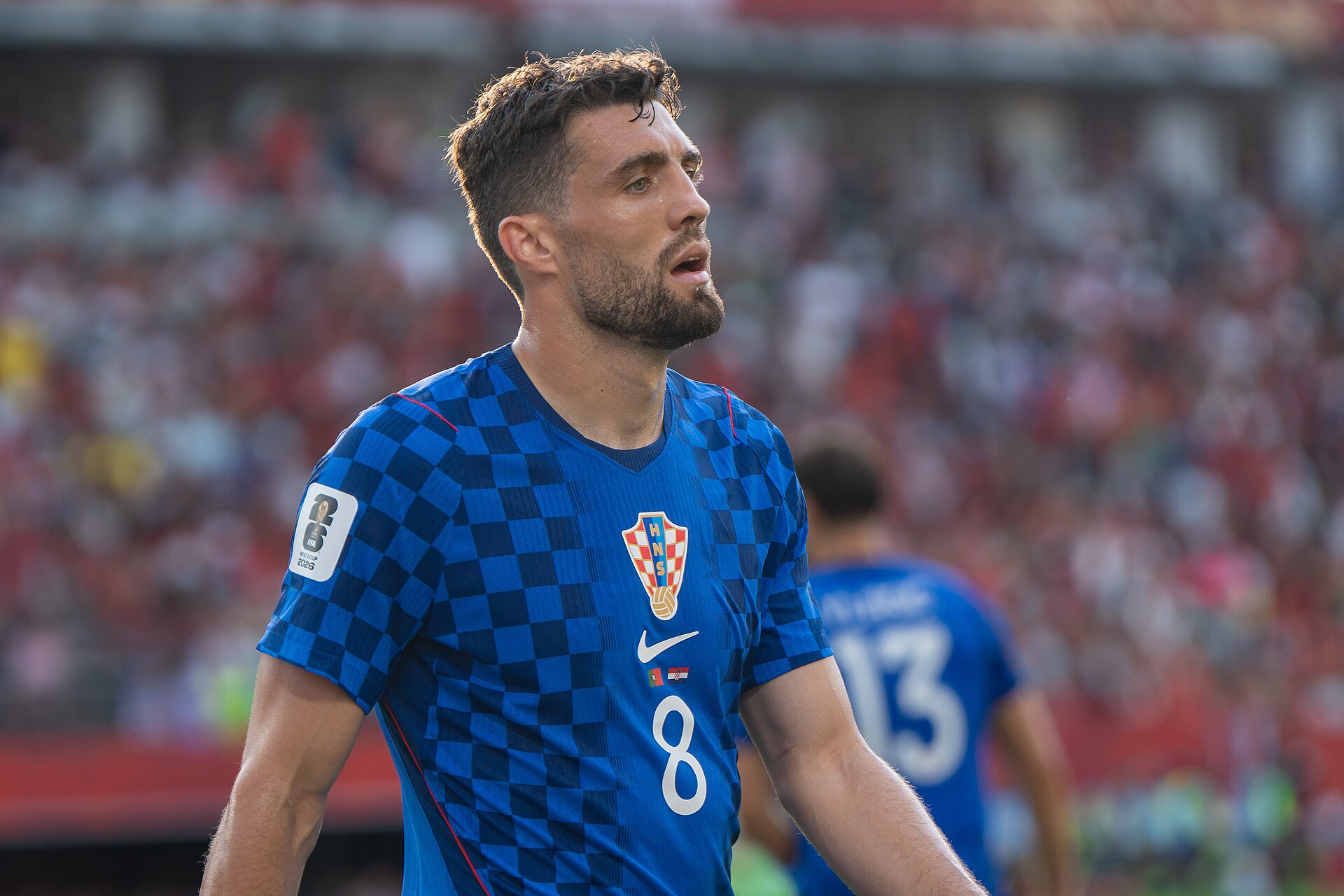
Archival cover photograph: Mateo Kovacic with Croatia against Portugal in July 2026; not an image of the current event. Photographer/creator: Bryan Berlin. Image source and metadata; CC BY-SA 4.0. The Wikimedia-supplied thumbnail is used without further modification. Image date as recorded by the source: 2026-07-02 19:32:52.
