Bayern Munich recovered from a two-goal deficit to draw 2–2 with Real Madrid in the Women’s Champions League on 28 October. Athenea del Castillo scored after seven minutes and Lineth Beerensteyn doubled Madrid’s advantage in the 22nd. Edna Imade replied in the 30th before Momoko Tanikawa made it level after 52 minutes.
The timing gives the comeback more detail than the final score alone. Imade struck well before the interval, allowing Bayern to begin the second half needing one goal to draw level rather than two. Tanikawa then equalised seven minutes into that half. Both sides still had a substantial portion of the game available to find a winner, but neither added to the score.
More possession did not mean more shots on target
ESPN credits Bayern with 63.6 per cent of possession and 16 attempts to Madrid’s seven. The shots-on-target count was level at four each. That distinction is central to reading the contest: a team can generate a larger total workload without creating a corresponding advantage in efforts that test the goalkeeper.
Four on-target attempts from 16 represent one quarter of Bayern’s recorded shots. Madrid put four of seven attempts on target. Those are descriptive accuracy rates, calculated from the published figures; they are not expected-goals values and do not establish how difficult individual chances were. They help explain why a broad possession gap can coexist with an even score, rather than proving that one side deserved a particular outcome.
Two different stages of the recovery
Madrid’s early goals created a clear advantage before the midpoint of the first half. Imade’s reply changed the arithmetic before the break: one successful Bayern attack would now be sufficient to restore parity. That is a concrete change in the task facing the home team, even without attributing the recovery to an undocumented dressing-room message or tactical adjustment.
Tanikawa’s equaliser also distinguishes this match from a last-minute escape. Bayern were level with most of the second half still to come. The final result therefore reflects both a successful recovery and an extended period in which neither side could move in front again. Madrid’s opening efficiency and Bayern’s response belong in the same account; reducing the story to only one of them would leave out the other half of the contest.
What can be concluded from one match?
Bayern demonstrated the ability to repair a two-goal deficit in this particular game. Madrid demonstrated the effectiveness of their early finishing but did not preserve the lead it produced. Possession and attempt totals support an account of a higher Bayern workload, while the equal shots-on-target figure limits any claim that the match was one-sided throughout.
This is an interpretation of the recorded events, not an assertion about a player’s fitness or a dressing-room problem. The verified elements are the goals, their timing and the statistical comparison. The assessment of how the lead changed hands follows from those elements. That separation is useful when a dramatic comeback invites explanations that the available match record cannot independently prove.
Bayern Munich 2–2 Real Madrid
Match date: 2026-10-28 19:45 Asia/Jerusalem. Result and scoring timeline according to ESPN’s match record.
- Athenea del Castillo — 7' — Real Madrid
- Lineth Beerensteyn — 22' — Real Madrid
- Edna Imade — 30' — Bayern Munich
- Momoko Tanikawa — 52' — Bayern Munich
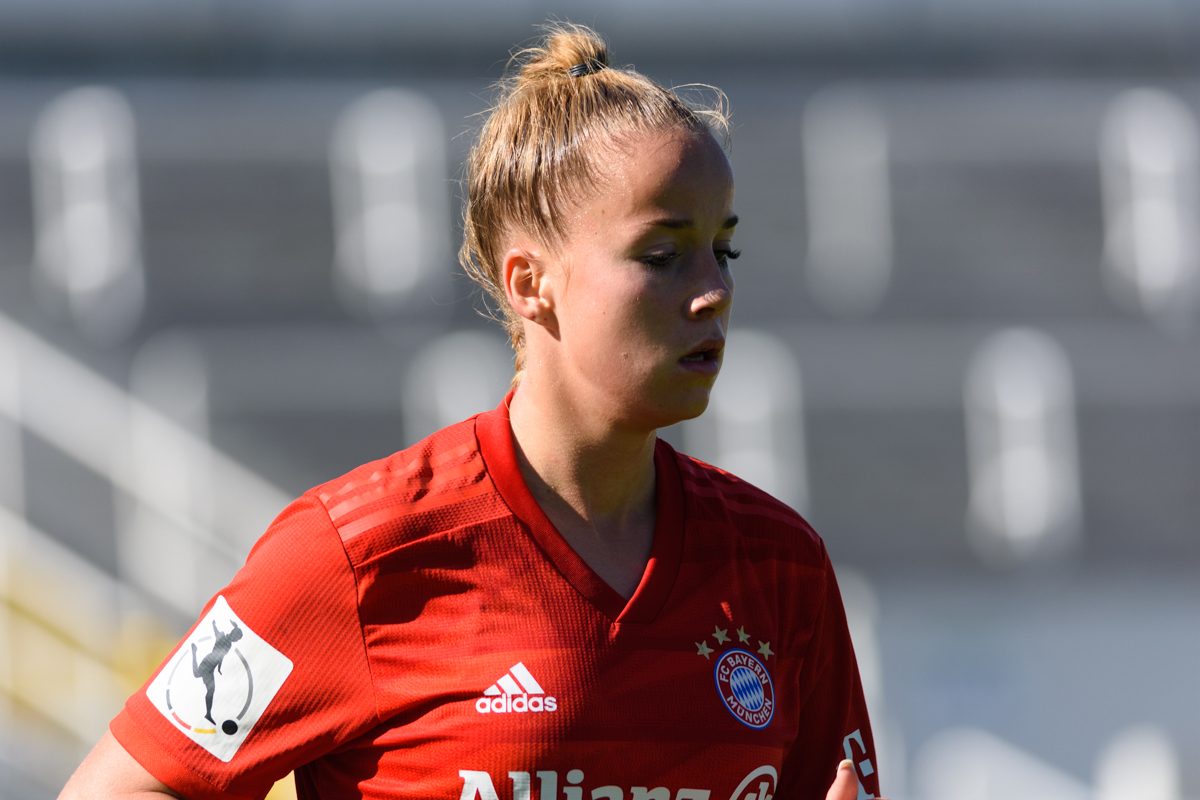
Archival cover photograph: Giulia Gwinn during Bayern Munich against Leverkusen Women in September 2019; not an image of the current event. Photographer/creator: El Loko Foto. Image source and metadata; CC BY 4.0. The Wikimedia-supplied thumbnail is used without further modification. Image date as recorded by the source: 2019-09.
